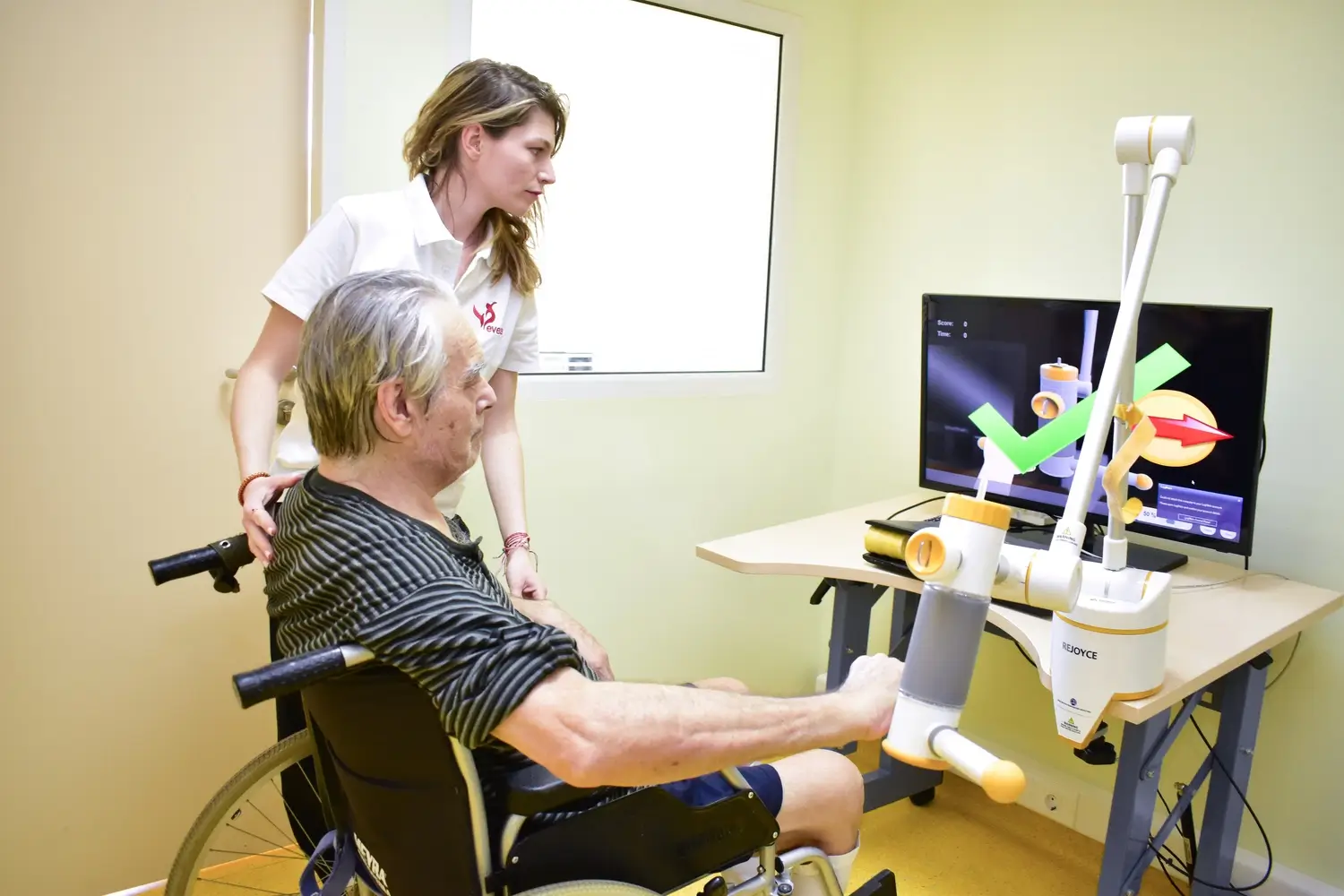
Cauda equina syndrome rehabilitation
Cauda equina syndrome is a surgical emergency, and the decompression operation rightly gets all the urgency. What determines long-term function, though, is what happens in the weeks after it. Our programme rehabilitates the things cauda equina actually takes: bladder and bowel control, lower-limb strength and gait, sensation, and the confidence to live independently.
Hydrotherapy
Bladder and bowel rehabilitation
Pain management
Occupational therapy and home-environment planning
Specialist rehabilitation for cauda equina syndrome
In plain language
Cauda equina syndrome is caused by compression of the bundle of nerves at the base of the spinal cord (the cauda equina). The most common cause is a large herniated lumbar disc. Effects can include leg weakness or paralysis, numbness around the saddle area, severe back and leg pain, and bladder or bowel dysfunction.
Why specialist rehabilitation matters
Recovery after cauda equina decompression is highly individual and time-sensitive. Structured rehabilitation immediately after surgery, with intensive physiotherapy, hydrotherapy, bladder and bowel management, and psychological support, gives the cleanest path to functional recovery and long-term continence.
The Evexia Plus approach
- Daily physiotherapy targeting lower-limb strength, mobility and gait.
- Hydrotherapy in our three-pool complex, particularly valuable for early mobility work after decompression.
- Bladder and bowel rehabilitation programme, with patient and family education on long-term self-management.
- Pain management alongside therapy, with input from our medical team.
- Occupational therapy targeting activities of daily living and home-environment planning.
- Psychology support for adjustment.
- Indicative length of stay: four to eight weeks.
Suitability
We accept patients post-decompression, medically stable enough for active rehabilitation. We work closely with the referring spinal surgeon in Ireland throughout.
Linked services
Cost
Cost is discussed individually. See How It Works for the categorical breakdown of what is reimbursable by the HSE under the Cross-Border Directive. Speak with our Irish team for a personalised estimate.
The operation is done. Now comes the part that decides daily life.
Tell us when the surgery happened and where recovery stands. We will map out what a focused programme can still reach.